Training in cold and high-altitude air
Inhale. Exhale. Cold air. The body awakens.
Cold is not an opponent. It is a mirror.
Direct. Clear. Vital.
When you move outside or breathe consciously, a silent work begins within the body.
Vessels react.
Cells adapt.
Mitochondria – the small power plants of your cells – increase their activity.
The body becomes more efficient.
The stimulus of the cold
Cold is one of the hormetic stimuli.
This means:
a short stress impulse that can trigger adaptation processes.
Even a few minutes of cold can:
– activate brown adipose tissue
– increase energy expenditure
– increase mitochondrial production
Brown fat is not a cushion.
It is a biological furnace.
It produces heat, burns energy, and helps the body regulate inflammation.
Metabolism becomes more flexible.
The body learns to use energy more efficiently.
Breathing meets cold
Cold air automatically changes your breathing.
You breathe deeper.
More consciously.
Slower.
Breathing techniques from modern cell research – and methods like those of Wim Hof – show that the body can train its CO₂ tolerance.
This means:
Oxygen is used more efficiently.
Many people feel the effect immediately:
clearer head
calmer pulse
more focus
The power of altitude
My Mountain Moments is located at approximately 1,300 meters.
At this altitude, the air contains slightly less oxygen.
The body reacts to this with adaptation.
It produces more erythropoietin (EPO) – a hormone that stimulates the production of red blood cells.
More red blood cells mean:
better oxygen transport
more endurance
more energy
Athletes use this effect specifically in altitude training.
Here in the Ahrntal valley, it happens quite naturally –
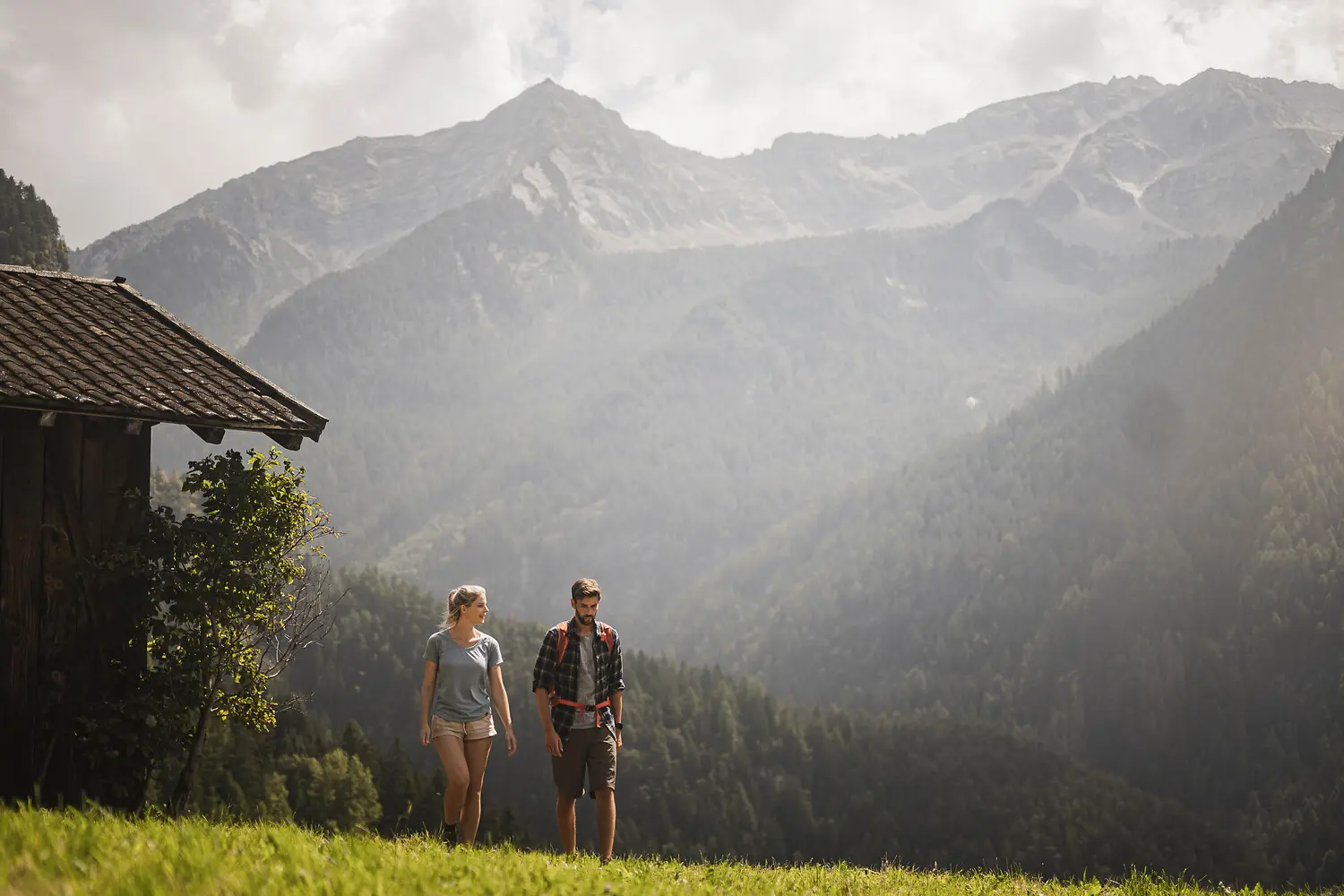
during a trail run, while hiking, or while breathing calmly in the clear mountain air.
When winter leaves – the cold remains valuable
Winter is slowly retreating.
The sun is getting stronger.
And yet, it is worth taking the cold with you for a little longer.
The body loves contrasts.
Warmth.
Cold.
Movement.
Rest.
Especially in spring, these moments occur almost by themselves.
In the early morning, clear, cool air still hangs over the mountains.
At altitude, the breath remains fresh.
And sometimes a short moment in a cold room is enough.
With us, for example, that is the ice mist corridor in the ANIMA Spa.
A few calm breaths.
A short cold stimulus.
The body realigns itself.
Perhaps this is the most beautiful transition from winter to spring:
enjoying the warmth –
and not forgetting the cold.
The body remembers.
COLD FLOW
Yours,

stay grounded and enjoy every moment
Next week in the MMM Magazine:
MID ALTITUDE MAGIC – Why altitudes between 1,200 and 1,800 meters change body and energy
How about a micromoment in the meantime – just for you?
MICROMOMENT OF THE WEEK
Spring. Everyone is chasing the sun. Today we do it differently.
FIND THE COLD
Go outside briefly in the morning. Find the coldest spot.
North side.
Shadow.
Mountain air.
Without a jacket. Ideally barefoot.
Breathe calmly through your nose for one minute.
If you are barefoot, walk slowly. Feel the ground beneath your feet.
Stone.
Earth.
Grass.
The body loves such small surprises.
Anyone can do warm. Cold trains.
COLD FLOW
Sources:
INEX Health (2024)
Cold Exposure and Mitochondrial Adaptation
Harvard Medical School (2023)
Cold Stress & Emotional Resilience
Max Planck Institute (2022)
Brown Fat Activation and Metabolic Health
edubily (2023)
Breathing, CO₂ Tolerance and Energy Regulation